Hack to the Future
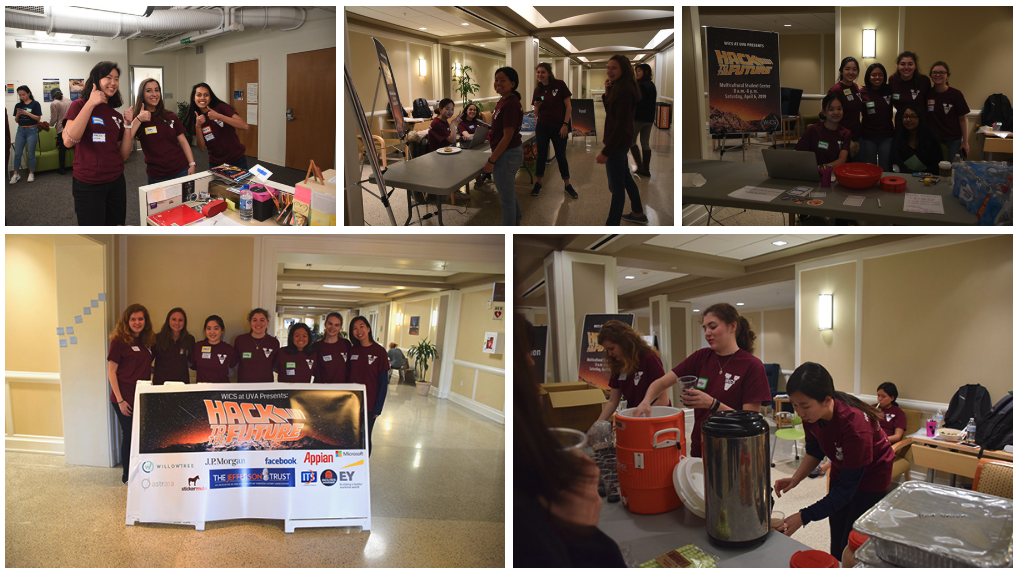
I directed a hackathon for the Women in Computing Sciences, raising $4,000+ in funding.
Role
Co-director
Market researcher
Timeline
Aug 2018 - Apr 2019
(8 months)
Tools
Google Suite, Slack, Figma, MailChimp, Wix
Skills
Event Strategy, Leadership, User research, Market research, Survey Design
Overview
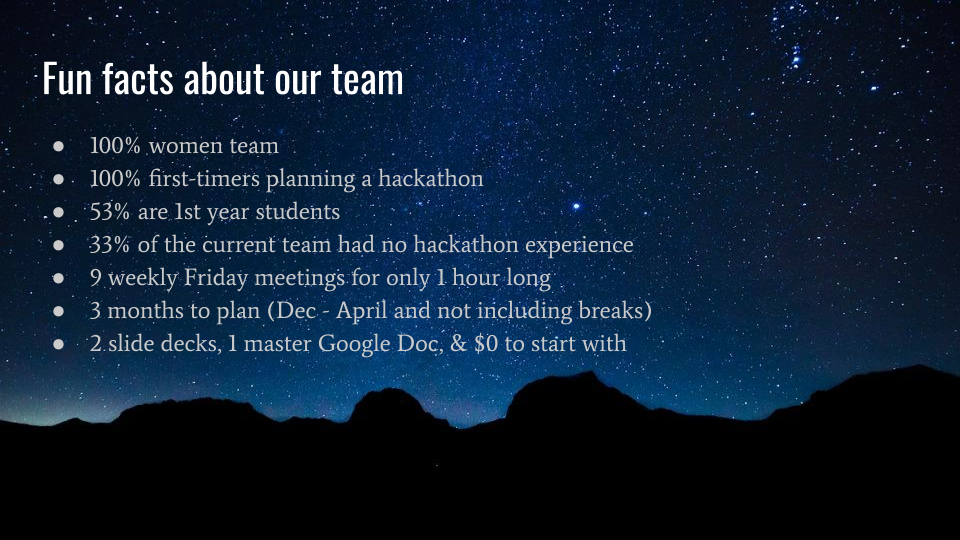
As Co-Director of Women in Computing Sciences (WiCS) at the University of Virginia, I led the organization of its annual hackathon from the ground up. With limited documentation, minimal funding, and a new team, I developed the strategy, recruited and trained 13 team members, led marketing and fundraising efforts, and designed the operational structure needed to deliver the event.
The result was a 2× increase in attendance, $4.1K in funding, and an event framework that enabled future WiCS teams to build on our work. The project got a mention in the school's newspaper.
Problem
WiCS had an ambitious goal: deliver a larger and more engaging hackathon than the previous year. However, the team had limited documentation to build from, fewer than 20 attendees at the previous event, and no established funding strategy.
I needed to create structure where very little existed, while simultaneously building a team, understanding our audience, securing resources, and developing an experience that could be successfully delivered within our constraints.
Rather than treating the event as a one-time project, I focused on creating a repeatable process that future teams could inherit and improve.
The Approach
I approached the hackathon as a systems and experience-design challenge. My work spanned three interconnected areas:
- Build the team: Recruited and trained a 13-person team, establishing roles and processes for event planning, marketing, fundraising, and logistics.
- Understand and reach our audience: Used market research, surveys, digital marketing, and direct outreach to better understand our audience and increase awareness across the university.
- Design for long-term sustainability: Documented processes, established infrastructure, and created reusable resources so future WiCS teams would have a stronger foundation to build from.
Event Day
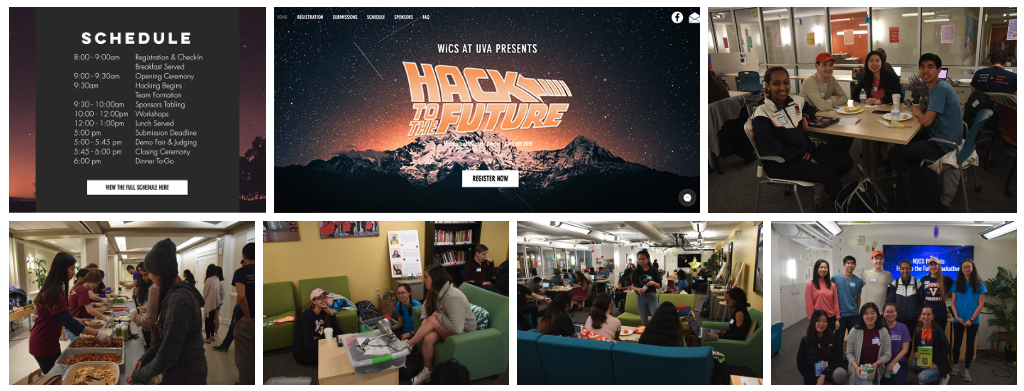
After months of planning, we held our hackathon on April 6th, 2019. The event brought together students with a range of technical backgrounds and experience levels, reinforcing the importance of designing an inclusive experience, not just an efficient one.
Results & value
The redesigned approach significantly improved the scale and sustainability of the event.
- 13 team members recruited and trained, with 8 later moving into WiCS leadership roles
- $4.1K in funding secured through targeted marketing and fundraising campaigns.
- 1,000+ students reached through MailChimp, Facebook, and in-person outreach.
- I doubled the attendance from the previous year.
- Increased visibility and accessibility of the hackathon, helping participants across different backgrounds and experience levels engage with the event.
- Long-term infrastructure established, giving subsequent teams a stronger starting point for planning and execution.
The project ultimately extended beyond a successful event. It created a stronger operational foundation for the organization and helped develop the next generation of WiCS leaders.
Reflection
One of the most valuable lessons from this project was learning how to design and prioritize within uncertainty. Funding arrived incrementally, which meant we could not confidently commit to a larger budget for prizes, incentives, and promotional materials. Rather than overextend the team or promise an experience we could not reliably deliver, we adapted the original concept from a full-day hackathon to a focused half-day event.
I also learned that a low barrier to joining the planning team created its own challenges. As team members' availability and commitment changed, we had to redistribute responsibilities, mentor new members, and continuously adapt our processes.
These constraints reinforced an important principle I now bring to design work: a successful experience is not simply the result of an ambitious vision, it comes from understanding constraints, prioritizing what matters most, and creating systems that can adapt.